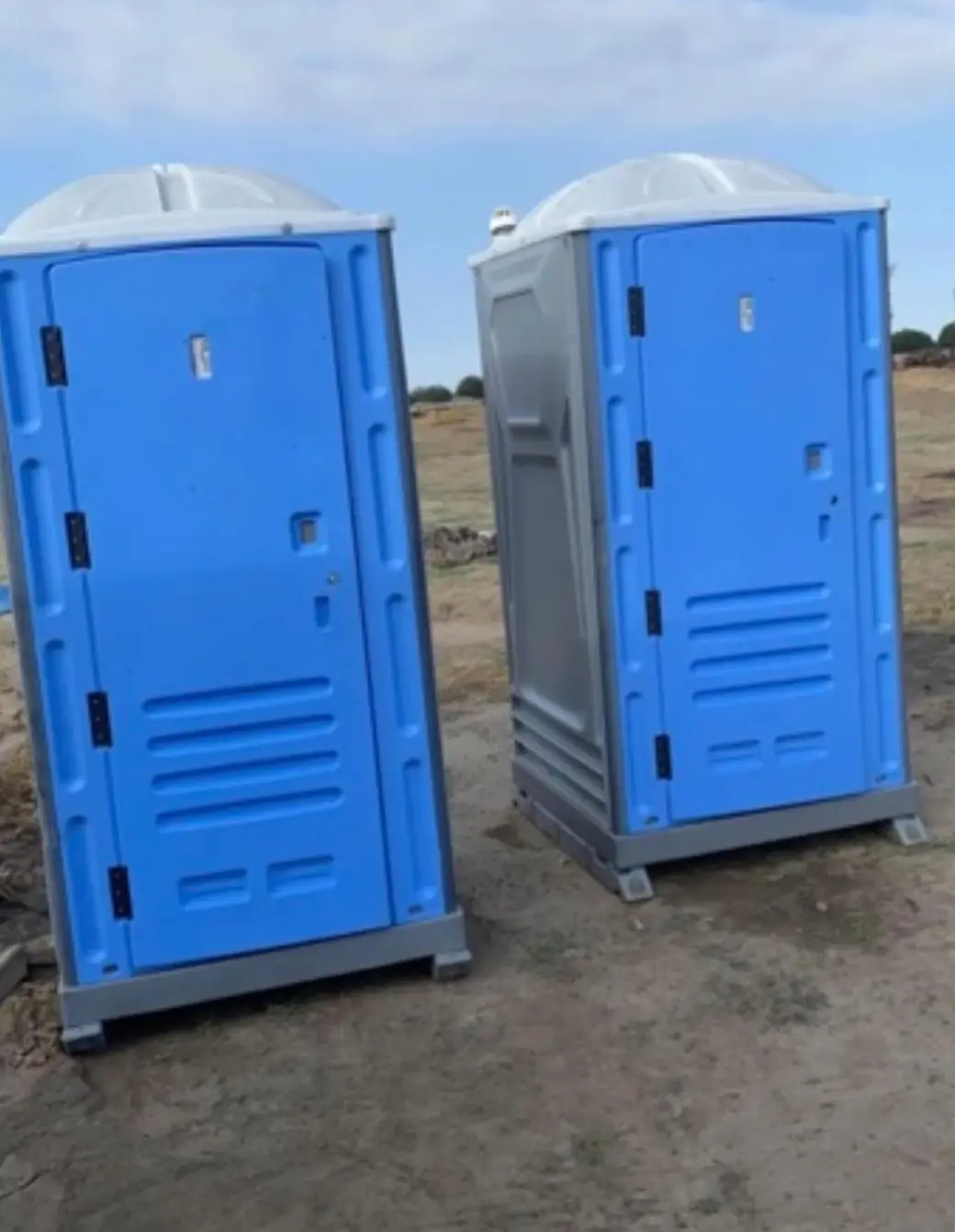
Webb County is the biggest natural gas producer in the Eagle Ford, averaging about 3 billion cubic feet a day in late 2024, according to the Federal Reserve Bank of Dallas. Behind that number are drilling pads, frac spreads, gathering lines and pipeline right-of-ways spread across brush country. Most of them sit miles from the nearest flush toilet.
Why do Webb County gas pads need portable restrooms?
Webb County gas pads need portable restrooms because most sit on private ranch land, miles down caliche lease roads with no buildings or plumbing. A crew of 20 or fewer needs at least 1 toilet under OSHA's construction table, and a 60-gallon PolyJohn PJN3 handles that crew between weekly service visits.
Pads also change fast. A location might host a small crew for weeks, then a large completion crew for a few days, then just a pumper. We size the order to the busiest phase and adjust it when the crew changes. Tell dispatch your headcount by phase when you call.
How do I give a delivery location for a pad with no address?
Give a pad location with a Google Maps pin, not a county road address. Drop the pin on the exact spot, text it to (956) 396-3700, and add the gate code, the lease name and a site contact. One pin and 3 notes save the driver a long search of ranch roads.
- Drop a pin on the pad where the unit should sit, not on the ranch gate.
- Add the entry pin if the gate is far from the county road.
- List the gate code or lock combination, and say whether the gate must be closed behind the truck.
- Name the site contact who answers a cell phone on location, plus a backup.
- Note hazards: cattle guards, low-water crossings, soft spots and any locked inner gates.
callers in our 2026 review were booking for a property or event that someone else controlled. On a lease, that is almost every order, so the on-site contact's number matters as much as the pin.
Source: 19 recorded porta potty rental calls reviewed by our office, 2026.Can your trucks handle caliche roads and cattle guards?
Our trucks run caliche lease roads and standard cattle guards every week. Webb County's clay-loam soils and caliche hold a truck well when dry. The limits are washouts, mud after rain, narrow guards and low branches: the truck needs a path about 10–11 feet wide with nothing hanging lower than 12 feet.
Mesquite is the usual problem. A lease road that a pickup drives easily can still have branches that scrape a delivery truck's load. If the road has not been cleared in a while, tell us. After a heavy storm, give the road a day; Laredo's average is only about 19.7 inches of rain a year, but it often arrives in hard bursts between May and October.
When should a pipeline crew use a towable unit?
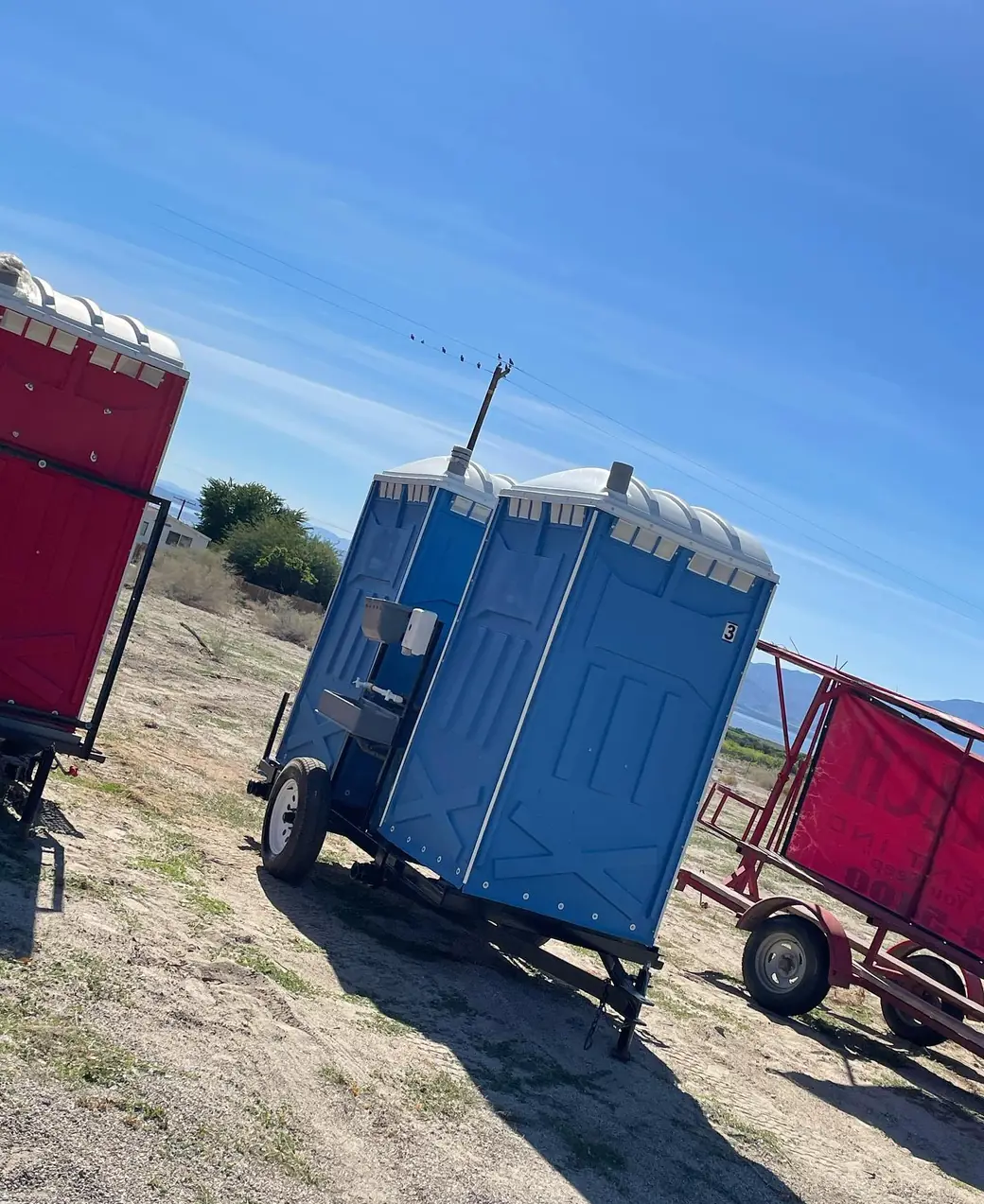
A pipeline crew should use a towable unit when the work moves more than a short walk every few days. A towable is a standard unit mounted on a single-axle trailer, so it travels with the crew along the right-of-way. Fixed pads that stay put for 28 days or more do fine with a standard unit.
| Site type | Best unit | Why |
|---|---|---|
| Drilling or production pad | Standard PolyJohn PJN3 | Stays in one spot; easy weekly service |
| Pipeline right-of-way | Towable unit | Moves with the spread |
| Gathering line or short tie-in job | Towable or standard | Depends on how often the crew relocates |
| Staging yard or laydown area | Standard plus hand-wash station | More people, fixed location |
Never drag a standard unit with a truck or tractor to move it. It can tip, and a used unit cannot be moved until it is pumped. That rule is why towable units exist.
Which OSHA sanitation rule applies to an oilfield crew?
The OSHA rule depends on the work. Pipeline and pad construction usually follows 29 CFR 1926.51, which requires 1 toilet for 20 or fewer workers. Many well servicing and production tasks fall under general industry sanitation, 29 CFR 1910.141. Ranch hand labor on the same land follows OSHA 1928.110. Your safety lead decides which applies.
We do not give legal advice, but we can match any count you give us. OSHA 1926.51(f) requires washing facilities where crews handle paints, coatings or other harmful contaminants, so many pipeline spreads add a hand-wash station. The official construction text is at OSHA 1926.51, and our OSHA porta potty guide walks through the tables in plain English.
Do ranch crews and hunting camps on the same lease need their own units?
Ranch crews and hunting camps on the same land usually need their own units, because they work miles from the pad. OSHA 1928.110 calls for 1 toilet and 1 hand-wash facility per 20 hand-laborers, within a quarter-mile walk, once a farm employs 11 or more. Camps book on our seasonal or ranch plans.
Webb County is still ranch country, with livestock making up about 97% of its farm income in 2002, and many leases share the land with cattle and deer seasons. A unit at the pad does nothing for a fence crew 6 miles away. We can drop a separate unit at the ranch headquarters, a working pen or a hunting camp on the same route day. Our ranch, hunting lease and RV page covers camps, and the Webb County rentals page lists every community we reach.
How does weekly service work on remote Webb County sites?
Weekly service on remote Webb County sites runs on a regional route day, so every pad in one area gets serviced on the same trip. Each visit pumps the tank, sanitizes the unit, restocks supplies and leaves a dated ticket. From May to September, crews of 8 or more should add a second weekly visit.
Route days keep the cost down. One truck can service several pads along SH 359 toward Oilton and Bruni in a single run, instead of making a separate trip for each. If your crew size jumps for a completion, call ahead and we add a visit to that week's route.
lost sales in our 19-call review came after a rural route that ran only one day a week pushed the re-quote higher. We set your route day when you book and say up front what an extra visit costs.
Source: 19 recorded porta potty rental calls reviewed by our office, 2026.“Do you need a gate code?”
“Can it go back by the barn on a dirt drive?”
“Can you get one out here tomorrow?”
Wording from recorded rental calls (19 calls reviewed, 2026), names removed. These are questions, not reviews.
What should I send dispatch to order a pad site unit?
To order a pad site unit, send 6 things to (956) 396-3700: the Google Maps pin, gate code, site contact, crew size, start date and expected job length. Add any cattle guards, low-water crossings or site-entry rules. Dispatch confirms the zone, the route day and an itemized 28-day quote.
Payment is by card or a secure invoice link by text, and business accounts can be invoiced. The 28-day cycle starts on drop day and renews until you call for pickup, with no contract. For yard and warehouse work closer to town, see our Laredo truck yard restroom guide.
Haulers of portable toilet waste in Texas must register with the TCEQ as sludge transporters. Ask any vendor, including us, how and where the waste from your lease is handled.