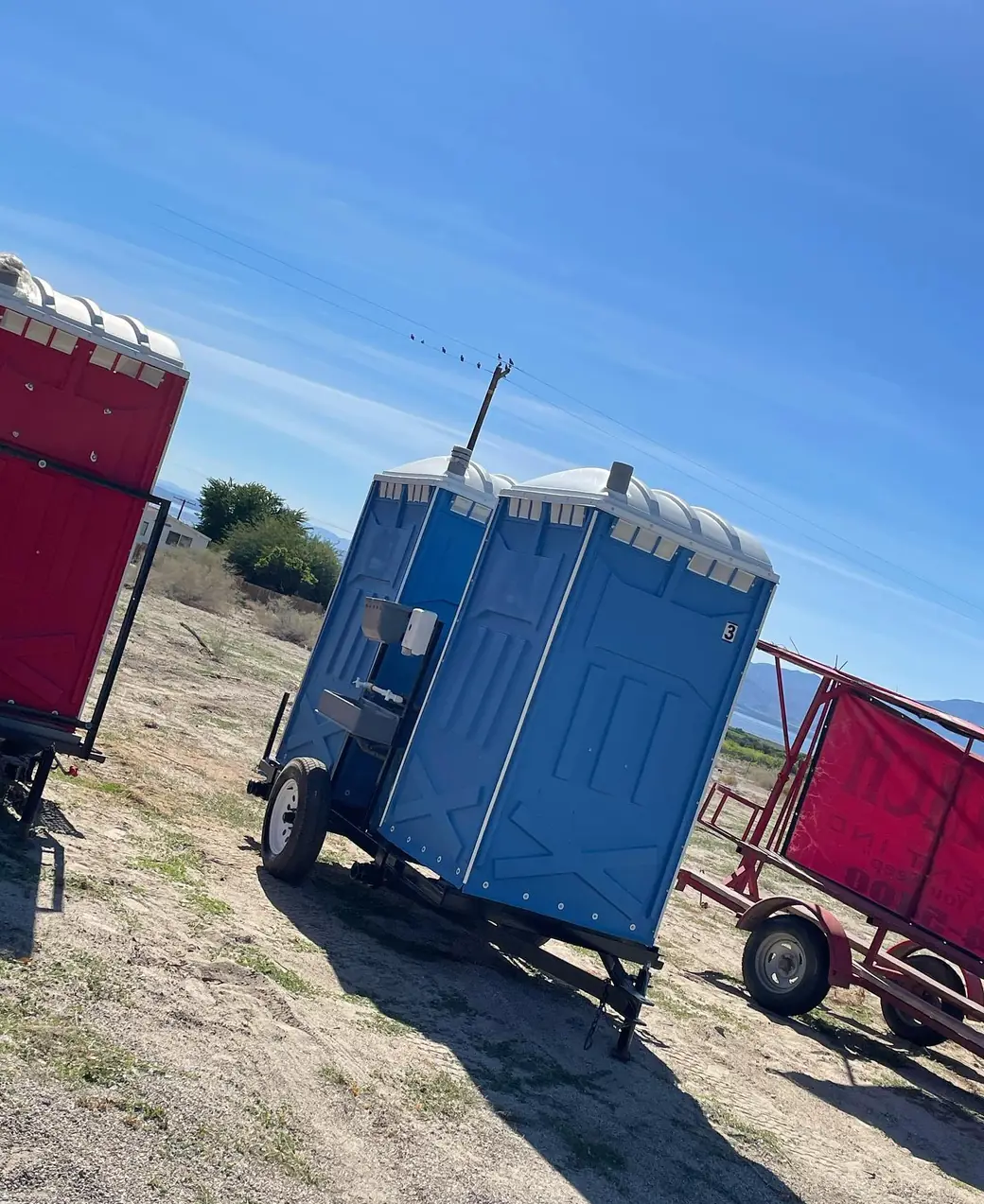
Placement problems in South Texas look different from placement problems anywhere else. Our drivers deal with caliche that turns to slick paste, a low corner of the yard that flooded last September, a cattle guard nobody mentioned, and a German Shepherd behind an electric wire. This guide covers each one, so the unit lands in the right place on the first trip.
What ground is best for a porta potty around Laredo?
The best ground for a porta potty around Laredo is level and firm: caliche, gravel, packed dirt or concrete. Webb County soils are mostly clay and loam with caliche, which hold a 175-pound unit well when dry. Avoid soft sand, fresh fill, slopes and any spot where water collects after rain.
Level matters more than people think. A unit that leans a few degrees makes the door swing open or shut on its own, and guests feel it rock. Our drivers shim the base on uneven caliche, but they cannot fix a real slope. If the only flat spot is far from the house, that is still the better choice.
| Surface | Dry weather | After rain |
|---|---|---|
| Concrete or asphalt | Ideal | Ideal, unless it is the low spot |
| Caliche drive or pad | Ideal | Slick; truck may stop short and cart the unit |
| Packed dirt or gravel | Good | Usually fine if it drains |
| Lawn | Good for the unit; truck parks off it | Truck stays on the driveway |
| Clay-loam pasture | Fine if level | Soft; pick a spot near a firm road |
How do I keep a porta potty out of a flash-flood spot?
Keep a porta potty out of flash-flood spots by placing it on the highest level ground the truck can reach, away from ditches, arroyos, creek banks and the low corner of a yard. On September 25, 2025, one Laredo storm brought 17 water rescues, closed 18 streets and opened 4 sinkholes.
Laredo averages only about 19.7 inches of rain a year, but much of it falls between May and October, often in hard bursts. In July 2025 the city closed riverfront parks ahead of Rio Grande flooding. If your event or job is near the river, a creek or a drainage channel, pick the spot with flooding in mind even if the forecast looks dry.
- Look for clues: a line of debris, cracked dried mud or bare dirt where water stood after the last storm.
- Stay off drainage paths between houses and along fence lines.
- Jobsites: keep units out of retention ponds and freshly graded swales.
How much room does the delivery truck need?
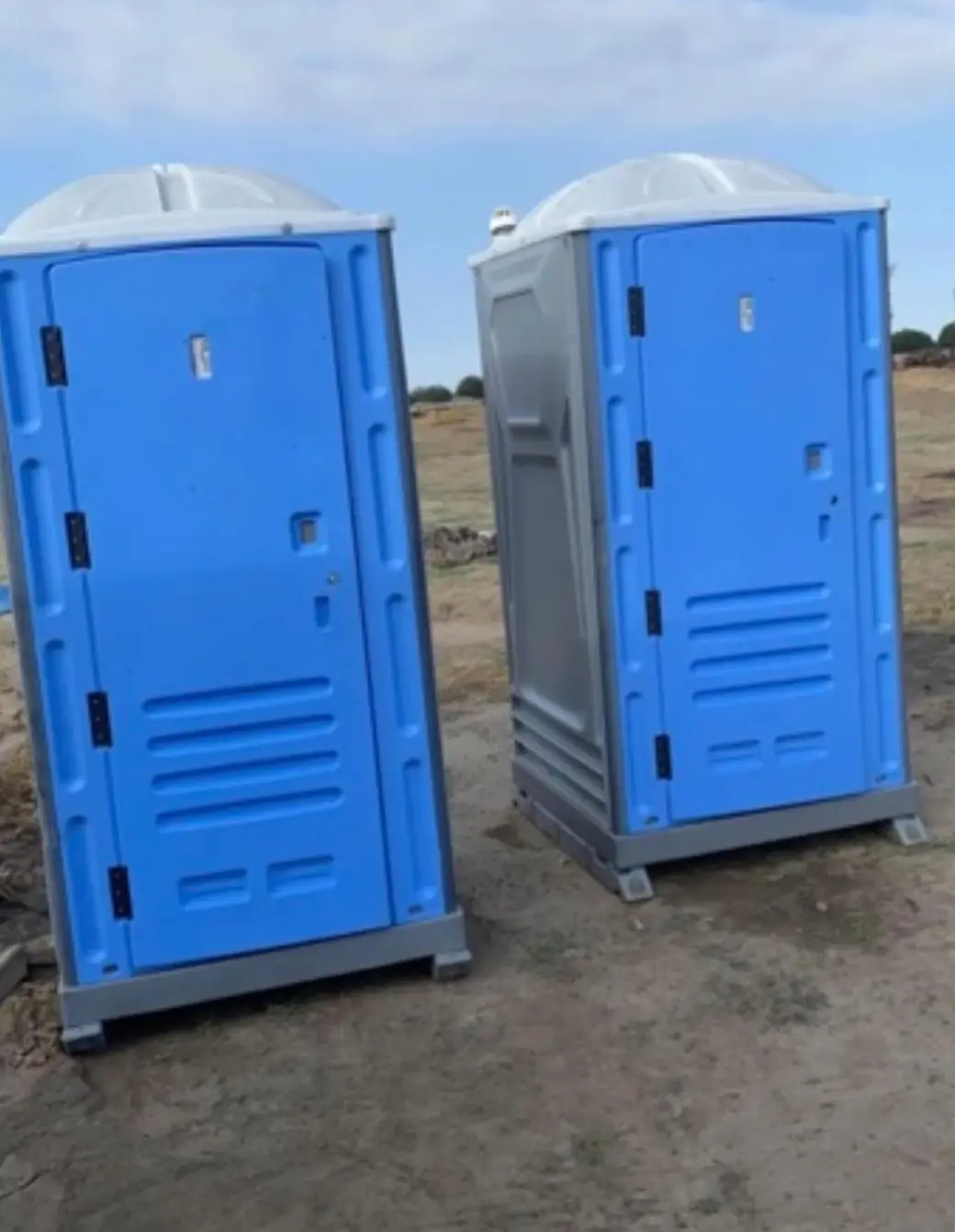
The delivery truck needs a path about 10–11 feet wide with nothing hanging lower than 12 feet: no cable lines, phone drops or mesquite branches. Our crew can cart an empty unit about 25 feet from where the truck stops. A standard unit needs a gate at least 48 inches wide to reach a backyard.
Low cables are a common surprise. In our reviewed calls, one homeowner warned about a cable slung over the driveway and asked the driver to call so he could guide the truck in. That is exactly the right move. Tell us about any line, and the driver calls before he turns in.
“There's a cable slung over the road. I don't want them to lose it.”
“Have them call me as they get closer so I can pilot them in.”
“Can it go by the trees across a little bridge?”
“He probably won't bite, but he's a German Shepherd.”
Wording from recorded rental calls (19 calls reviewed, 2026), names removed. These are questions, not reviews.
What should I tell you about cattle guards and ranch gates?
Tell dispatch how many cattle guards and gates sit between the county road and the drop spot, whether any guard is narrow or damaged, and every gate code. Send a Google Maps pin of the exact spot. Two notes and 1 pin save the driver from a wrong turn on a ranch with several gates.
- Count the guards and say if any have a side gate the truck should use instead.
- Give every gate code, and say whether gates must be closed behind the truck.
- Warn about livestock in the pasture the truck crosses.
- Describe the road: caliche, dirt, or two-track, and any washouts since the last rain.
Ranch, hunting lease and oilfield drops follow the same rules. Our Webb County pad site guide covers lease roads in more detail.
Can a porta potty go across a creek or a small bridge?
A porta potty can go across a creek only if the truck can cross safely, or if the spot is within about 25 feet of the near bank so the crew can cart it over a footbridge. A low-water crossing that floods after rain is a bad route, since the service or pickup truck may not get back.
One caller in our review wanted the unit by the trees across a creek and a small bridge on a large lot. That can work for a dry weekend party. For a 28-day rental, pick the near side of the creek, because the truck must come back every week and Laredo storms can wash out a crossing between visits.
callers in our 2026 review did not know where the unit would go when they booked. That is fine: book first, then text a photo of the spot any time before delivery, or show the driver on the day.
Source: 19 recorded porta potty rental calls reviewed by our office, 2026.What about dogs, electric fences and sprinklers?
Put dogs inside on delivery and pickup days, turn off electric fences along the truck path, and pause sprinklers that soak the drop spot. Mention all 3 when you book so the driver gets a note. A loose dog can stop a delivery, and a dry-run fee can apply.
One homeowner in our reviewed calls had both a dog and an electric fence on the property. We ask about both at the start of every call. Electric fence wire is hard to see from a truck cab, and a driver who backs into it can damage your fence and his truck.
Does the spot need to work for weekly service too?
Yes. On a 28-day rental, the spot must work for 4 or more service visits per cycle, not just delivery. The pump truck parks within reach of the unit every week, so the path has to stay open as the job changes. Stacked materials, parked trailers or a new fence can block it.
Remodels are where this often goes wrong. The unit lands beside the driveway in week one, and by week three a dumpster, a pallet of block and a contractor's trailer sit between it and the street. Keep a lane open, or call dispatch and we move the unit to a better spot on the next service visit, after pumping. For jobsites, our construction site toilet page covers crew counts and weekly service.
How do I mark the spot if nobody will be home?
Mark the spot with a cone, flag, chair or ribbon, then text a photo to (956) 396-3700. Nobody needs to be home. The driver calls or texts about 30 minutes before arriving and places the unit on your mark, with 3 feet clear in front of the door and the door facing the way you choose.
If the unit is going to a different house, add the on-site contact's number. For streets and sidewalks, remember that City of Laredo right-of-way placement needs a permit from Building Development Services, pulled by a registered contractor, so we keep units on private property. For homes, the party restroom page shows typical setups, and our engagement party guide covers placing a deluxe unit at a house.